

 Back to Blogs
What Should You Look for in a New Entry Door?
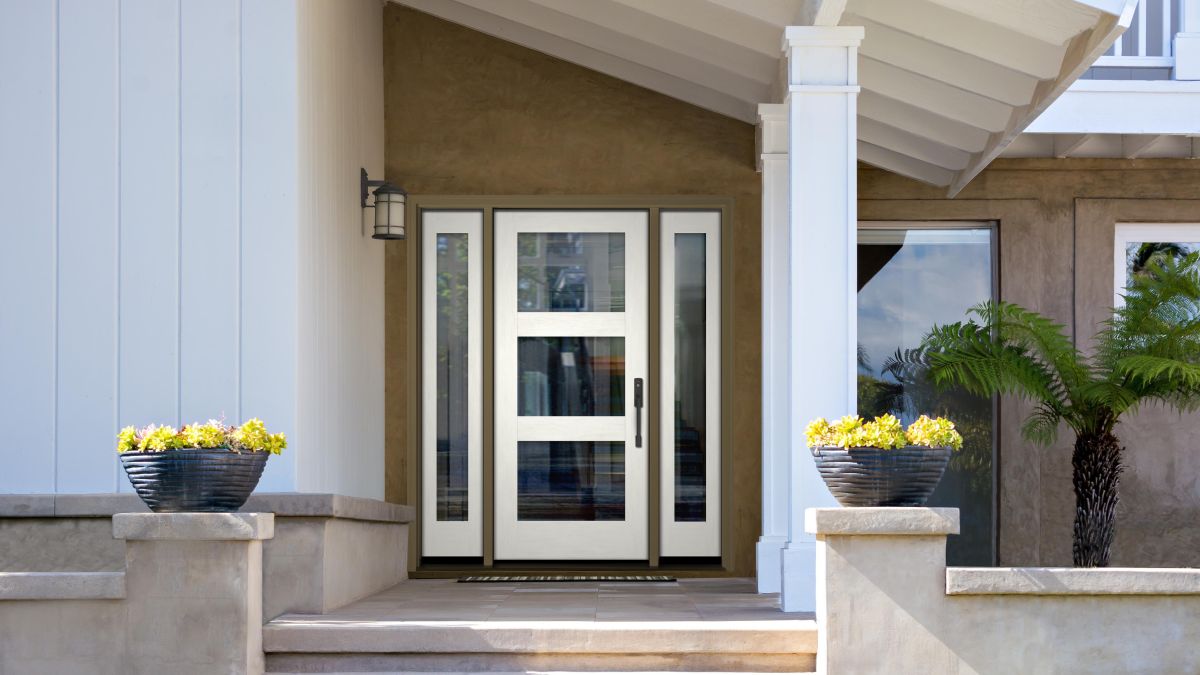
A good entry door comes down to five things: a durable material, real insulation, secure hardware, a style that suits your house, and a precise fit. These five points determine whether a door will still work well ten years from now.
Most homeowners start by comparing fiberglass. Its outer skin won't rot, warp, twist, or bow like wood, and it won't dent or rust like steel. Even so, a good door can fail if the opening is measured badly, which is why new entry door installation deserves as much thought as the door itself. Read on to learn more.
What Should You Look for in a New Entry Door?
Here’s what you should look for:
The Door Material:
Wood: Beautiful, but it swells with moisture and needs regular sealing and refinishing.
Steel: Strong and usually affordable, yet it can dent, and scratches may rust.
Fiberglass: Resists moisture, dents, and rust, and holds paint or stain well.
Fiberglass entry doors also come in two looks. Woodgrain versions copy the texture of oak, mahogany, or cedar, and they can be stained or painted. Smooth versions have a flat, paintable face that suits a clean, classic look.
Insulation and Energy Performance:
An entry door is a large hole in your wall with a handle. The core inside the door decides how much heat escapes in winter and sneaks in during summer.
Many fiberglass doors use an insulated core, and some manufacturers claim up to four times the insulation value of wood. Check the label for the U-factor, where a lower number means less heat moves through the door. Energy-efficient entry doors also depend on good weatherstripping and a tight sill, so look at those parts closely.
Security and Locking Hardware
A strong door skin is only part of entry door security. Hinges, the strike plate, the deadbolt, and the frame all work as one system, and the weakest piece sets the limit.
Multi-point locking hardware latches the door at several spots along its edge instead of just one. That spreads the load and pulls the door tight against the weatherstripping. Electronic keypad locksets are also popular now, and they remove the need to hunt for keys while holding groceries.
Style, Glass, and Curb Appeal
Your front door is the first thing people notice from the street. A door that fits the architecture of your house can improve curb appeal without touching the siding or landscaping.
Glass changes both the look and the light. Common choices include:
Full-lite or partial-lite panels that bring in daylight.
Decorative glass for a traditional feel.
Privacy glass, such as frosted or rain patterns, for hallways near the street.
Sidelites and transoms that widen the entry.
Internal blinds sealed between glass layers, so there is nothing to dust.
Color matters just as much. Dark colors absorb more heat and can show fading sooner on a south-facing wall, so ask how the finish handles direct sun.
Size, Fit, and Installation Quality
Most exterior doors are about 1¾ inches thick, and many front entries are 36 inches wide by 80 inches tall. Older homes often break that pattern because the framing settles over time and the opening may be slightly out of square.
Professional entry door installation deals with those surprises. A good installer checks the sill for rot, seals the threshold, adds flashing where needed, and shims the frame so the door swings smoothly and latches without a slam. A door that sticks in humid summers usually has a fit problem, not a door problem.
Maintenance and Warranty
Ask what upkeep the door needs. Fiberglass usually asks for an occasional wash and a fresh coat of paint or stain every few years, depending on sun exposure. Wood asks for far more attention.
Warranties vary a lot. Many fiberglass doors carry a lifetime limited warranty, but the fine print matters. Read what it covers, how long the finish and glass are protected, and whether installation errors are included.
What Questions Should You Ask Before Buying a New Entry Door?
A short list of good questions saves money and stress later. Bring these along when you compare quotes.
What is the door made of, and what is inside it? Ask about the skin and the core.
What are the U-factor and air leakage ratings? Look for numbers on the label rather than general claims.
How is the frame handled? Find out whether the frame, sill, and weatherstripping are replaced or reused.
What locking hardware comes with it? Ask about the deadbolt, strike plate screws, and multi-point options.
Is the glass sealed and rated for efficiency? Glass edges are common spots for fogging and leaks.
What finish options exist, and how well do they hold up in the sun? Ask to see real samples, not just screen images.
Bottom Line
The best entry door balances four things: a material that survives your weather, insulation that holds heat, hardware you trust, and a design you still like years from now. Accurate measuring and careful front door replacement work tie those pieces together, so judge the installer as carefully as the product. Window World Westchester offers fiberglass entry doors in woodgrain, smooth, and modern styles. Request a free quote now.
Frequently Asked Questions
-
Fiberglass is a top choice for most homes because it resists rot, warping, dents, and rust while needing little upkeep. Wood suits homeowners who accept regular refinishing, and steel works where budget is the main concern.
-
Replace it when you see drafts, warping, a door that sticks or will not lock cleanly, rot near the sill, or visible damage. A door that no longer matches your home's style is also a fair reason.
-
Yes, fiberglass doors usually have an insulated core and tight weatherstripping that limits heat loss. Check the U-factor on the label, since a lower number means better insulation.
-
Many exterior door replacements take about half a day to a full day. Custom, oversized, or damaged openings can take longer.
-
Yes, when the door, frame, hinges, strike plate, and lock are all in good condition and properly installed. Multi-point locking hardware adds extra holding power along the door edge.