

 Back to Blogs
Why Is Your Patio Door Hard to Open?
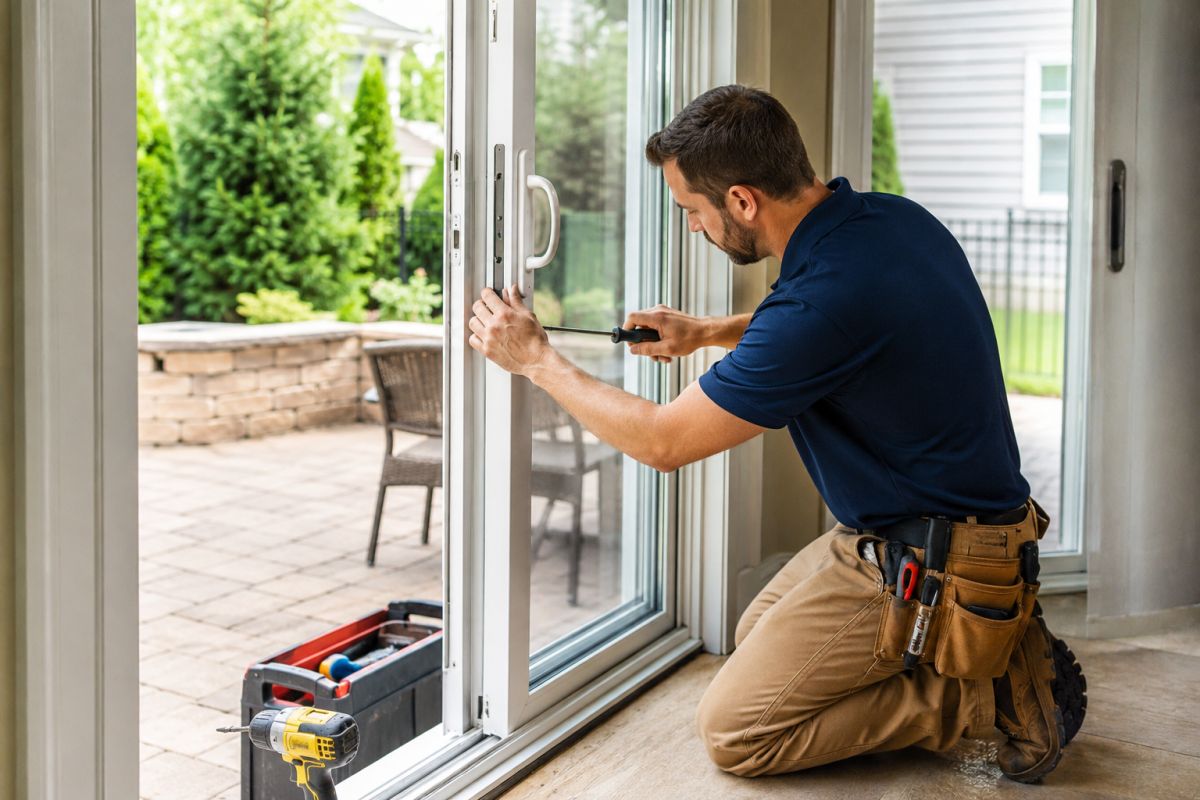
A patio door that fights you is almost always dirty, worn, or slightly out of square. Packed-in grime, tired rollers, and a frame that shifted with the seasons cause most cases. Many of these problems take one afternoon to fix, but a few mean it is time for patio door replacement.
Here is the pattern we see most. The door glided fine last summer. Then a cold morning arrives, you tug the handle with both hands, and the panel grinds along like a stuck drawer. That did not happen overnight. Grit, wear, and tiny frame movements add up until the door finally complains. In this post, we cover what causes it, what you can safely try yourself, and when repair stops making sense.
What Causes a Patio Door to Become Hard to Open?
A patio door becomes hard to open mainly because of dirt in the track, worn rollers, a bent track, or a warped or shifted frame. Dried-out hardware and loose hinges can make it worse. Most doors have more than one cause working at once.
Dirt, Pet Hair, and Debris in the Track
A sliding patio door rides in a narrow channel at the bottom. Sand, pet hair, dead leaves, and spider webs collect there fast, especially on doors that open to a deck or garden. A packed track can slow a smooth panel to a crawl. Slide the door slowly and listen. Gritty scraping usually means debris.
Worn or Broken Rollers
Every sliding panel rides on small wheels. A panel of insulated glass can weigh well over 100 pounds, so those wheels carry a serious load every single day. Over the years, patio door rollers flatten, crack, or rust. The door then drags, shakes, or rattles like a grocery cart with a bad wheel. Doors built with a tandem roller system roll quietly when new, and a loud door often means the rollers have worn out.
A Bent, Dented, or Worn Track
A track takes a beating from foot traffic, dropped furniture, and kids who treat the threshold like a balance beam. A dent causes the door to catch in the same spot every time. Cleaning will not fix a bent patio door track. A small dent sometimes can be carefully straightened, but a badly damaged track usually needs a professional.
A Warped or Settled Frame
Houses move. Humidity, temperature swings, and slow settling can push a door frame out of the square. Westchester homes see wide seasonal swings, so a door that behaves in May can stick in January. Look for an uneven gap around the panel, rubbing at one corner, or a lock that no longer lines up with its strike plate.
Hinges, Locks, and Weatherstripping on Hinged Doors
A hinged patio door, often called a French door, swings on hinges instead of sliding. A sagging hinge makes the door drag on the threshold or bump the second door.
A worn patio door lock can also cause trouble. Multipoint lock gears need to line up perfectly, and a small shift in the door can leave them fighting each other. Swollen or crushed weatherstripping can also make the door feel tight.
When Should You Call a Professional for Patio Door Repair?
Call a professional when the door jumps off its track, the frame looks out of place, the glass is cracked or foggy, or cleaning and adjusting changes nothing. A lock that will not engage is a security problem, and it should not wait.
Signs That Need an Expert
The panel keeps popping out of the track.
You see daylight or feel drafts around the frame.
Moisture appears between the glass panes.
The sill feels soft, stained, or spongy.
The door still sticks after you clean, lubricate, and adjust it.
The lock or handle no longer works properly.
A soft sill matters most. It often means water has been getting in for a while, and the damage may reach the framing underneath.
Repair or Replace?
Repair makes sense when one part has worn out inside an otherwise solid door. Fresh rollers or a new lock can bring an older door back to life at a modest cost.
Patio door replacement makes more sense when the frame is warped, water has damaged the sill, the glass seals have failed, or the same door keeps needing fixes. An old, drafty door that's hard to open usually costs you in comfort and energy.
Check your warranty paperwork before paying for parts. Some manufacturers cover defective locks and other mechanical parts.
Choosing a New Door
If you do replace, two styles cover most homes. A sliding door glides sideways, so it works well in tight spaces where a swinging door would block the room. Sliding vinyl models often use weatherstripping, metal reinforcement, and interlocking center rails to stay tightly closed.
A hinged door opens in or out and gives a clear, unobstructed view. Fiberglass models paired with multipoint locks add security, and an optional screen lets in fresh air without the bugs.
When you compare energy-efficient patio doors, look for ENERGY STAR and NFRC labels. Insulated glass, good weatherstripping, and thermal breaks all help keep indoor temperatures steady.
Bottom Line
A stubborn patio door rarely fails without warning. Dirt, worn rollers, a bent track, or a shifting frame usually build up slowly, and a good cleaning plus a little lubricant fixes many cases. When the frame, glass, or sill is damaged, repair only delays the inevitable.
Watch for clues: grinding sounds, drafts, fogged glass, and a lock that no longer lines up. Catch them early, and you will save money and frustration. If your door has reached the point where replacement makes sense, Window World Westchester in Tuckahoe, NY offers sliding and hinged patio doors backed by a manufacturer’s lifetime limited warranty. Request a free quote now.
Frequently Asked Questions
-
Dirty tracks and worn rollers are the most common causes. A bent track or an out-of-square frame can also make the panel drag.
-
Clean the track, spray it with a silicone-based lubricant, and adjust the rollers with the screws at the bottom of the panel. Replace the rollers if they are flat or cracked.
-
It can. Temperature swings make door materials expand and contract, which can tighten weatherstripping and shift the frame slightly.
-
Many last about 20 to 30 years with proper care, depending on the materials and climate. Rollers, locks, and seals often wear out sooner than the door itself.
-
Repairing a single worn part usually costs less up front. Replacement becomes the better value when the frame, sill, or glass seals are damaged, or when repairs keep repeating.